
Start with the service, not the download button
PP2 Game brings a game catalogue, profile and settings together for phone users. On a first visit, find those main sections and a route back to the opening screen. If a feature asks for an account or an Android installation, read its requirements before continuing rather than following the most prominent button.
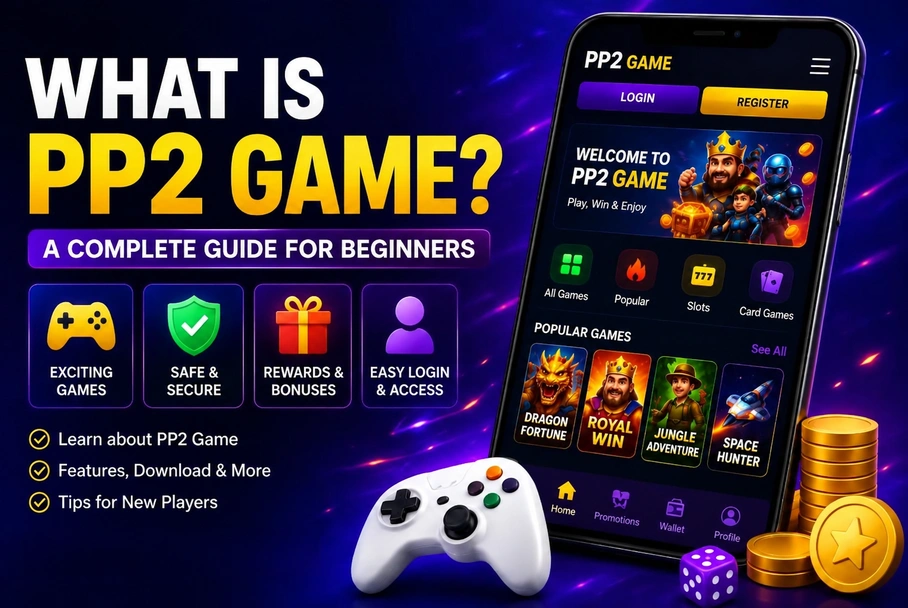
This beginner’s guide looks at the catalogue and menus, then covers installation, account access and problem solving. It also explains where a general description stops being enough: a file needs a verifiable source, an account needs clear conditions and your phone needs to meet the actual build requirements. Check those details in the current service rather than assuming an older tutorial remains accurate.
What the mobile platform brings together
PP2 is a mobile game service with game-selection and account functions arranged for phone use. Android access may involve a separately supplied APK, depending on the distribution method. The mobile format brings these tasks onto a smaller screen instead of requiring a desktop browser. It does not, by itself, establish the current catalogue or device requirements.
Check the version and service information before deciding what is available to you. A feature mentioned on another page may belong to an earlier release or a different account context. Review the Android requirements, permissions and present availability together. A package that can be downloaded is not necessarily one your phone supports, and an accessible service does not automatically establish eligibility to use every feature it advertises.
Separate these initial checks
- The layout is intended primarily for people using phones.
- Available functions can change with the release and service location.
- Android installation may use a separately downloaded package.
- Permission requests need a purpose connected with the app’s features.
- An unfamiliar download destination needs verification before use.
- Account requirements should be clear before information is submitted.
- Each game’s rules remain separate from knowing the main menu.
How the catalogue and account areas fit together
The opening interface provides routes to game sections, settings and account-related controls. Application and browser access, where supported, may present those functions differently. Use the labels on your current version to identify the task rather than expecting every screenshot online to match.
Begin with the main screen and locate a route back to it. Then inspect the catalogue, profile and help sections one at a time. You do not need to change preferences or try every option during the first visit. If a feature requires registration, read what it asks for before creating a profile. This approach also makes an unexpected redirect easier to recognise, because you know which task you were attempting when it appeared.
Inspect the features that matter to your intended use
A useful feature is one that supports the task you came to do. Someone seeking a particular game format should check the catalogue, while an existing user may care more about recovery and account settings. Do not assume that every feature described by a third party appears in your installed build.
Look for clear labels and instructions before interacting with unfamiliar controls. Account settings, notifications, update information and help should be assessed separately from game selection. A polished menu may be convenient, but it cannot verify the operator’s handling of data or transactions. Compare descriptions with the current interface and read the conditions attached to a feature before deciding to use it.
Find these parts of the interface
- Opening screen: Identify the main routes and how to return to this point.
- Catalogue: Check which game categories actually appear in the current service.
- Profile: Locate the controls for account information and access.
- Preferences: Review available language, notification or security options before changing them.
- Help: Find an identifiable route for reporting a specific problem.
- Release details: Compare the installed version with a proposed compatible update.
Check an Android package before opening it
A PP2 Game APK is an installation package, not proof that the source is legitimate. Downloading it and installing it are separate stages. Establish the publisher and destination before asking Android to open the file; an expected name alone does not verify its contents.
Compare the package requirements with your phone and wait for a complete transfer. Read warnings and review access requests as they arise. Keep security checks active rather than disabling them to force an installation. If the file or source cannot be established, leave it uninstalled. A successful setup would not resolve that uncertainty afterwards.
A considered installation sequence
- Identify a distribution source whose publisher you can verify.
- Compare the package version and stated device requirements.
- Save the file and confirm the transfer completed.
- Read Android’s source-permission or security message.
- Proceed only when the file checks are satisfactory.
- Let installation finish, then inspect the opening screen.
- Consider each permission before granting access.
- Use login or registration according to the actual account requirement.
- Assess future replacement packages with the same source checks.
What a download cannot tell you about safety
Several websites can offer files using the same application name. Their copies may differ in age, compatibility or contents. A quick transfer, familiar icon or completed installation does not show that a particular package is genuine. Verify the actual origin rather than treating those visible details as a safety test.
Review permissions and keep account credentials under your control. An unfamiliar person should not receive passwords, one-time codes or banking credentials in order to help you use an app. Payment or reward features also need separate scrutiny: their presence does not establish that participation is permitted or that funds are protected. Read the relevant conditions and restrictions rather than inferring them from software availability.
Questions worth asking about a file and service
- Can the publisher and download destination be established?
- Is the package the intended standard release rather than an alteration?
- Does each access request fit an identifiable function?
- Are relevant Android and security updates installed?
- Are passwords and one-time codes kept out of shared messages?
- Does the account have a unique password?
- Are reward claims realistic and supported by clear conditions?
- Can unexpected pop-ups be dismissed without following unknown links?
- Are privacy and service terms available to read?
- Is there a reason to stop after unexpected behaviour?
Keep registration, login and recovery distinct
If PP2 Game asks for an account, read the registration fields and use accurate details where required. An existing user should look for login rather than automatically creating a duplicate profile. Keep a private record of the information needed to recover access, so an unfamiliar intermediary does not become your only route back into the account.
After registration, inspect the available account-protection controls. Additional verification, where offered, is separate from the password you choose. Never give a support contact your password or private code; verifying that a channel is legitimate does not make those credentials appropriate to share. Use the intended verification or recovery screen instead.
Practical account habits
- Choose a long password that is difficult to guess.
- Reserve it for this account rather than reusing it elsewhere.
- Keep recovery information accessible only to you.
- Enter private codes only into the intended verification flow.
- Inspect security preferences before accepting their defaults.
- End a shared-device session with logout.
- Use an identifiable recovery or help route when access fails.
Learn the menu before making account changes
Locate the home screen, game list, profile and support area before exploring further. This gives you reference points when a guide uses a slightly different label or a later release moves an option. A simple interface is helpful when its sections remain understandable, not merely because it has fewer visible buttons.
Read the label and instructions before selecting an unfamiliar function. Account changes, new downloads and permission requests deserve separate decisions. The same applies to transaction-related controls. Familiarity with the surrounding menu should not lead you to approve an action without understanding its effect on the account, the phone or the information you supply.
Where the mobile format can be convenient
A phone puts the catalogue and profile controls within reach without requiring a computer. A layout designed for the smaller display can also make related tasks easier to find. Those are practical conveniences for someone who already prefers using Android for entertainment.
Convenience does not settle questions about quality, privacy or reliability. Compare the app’s requirements with your device, establish the source and review support and data-handling information independently. A service can be easy to navigate while still leaving an important condition unclear; evaluate the condition rather than letting the appearance of the interface answer for it.
Potential conveniences of the format
- Phone access when the current build supports the device.
- Mobile-friendly navigation.
- Related game categories gathered in a shared catalogue.
- Profile tasks available through the same mobile interface.
- Menus that can be inspected directly on a small screen.
- No desktop required for supported mobile functions.
Read the conditions before making a commitment
Find out who supplies the application, which information it requests and where questions can be raised. These details should be checked before regular use rather than only after a problem. Permissions and privacy information answer different questions, so review both instead of assuming one replaces the other.
Also check the current terms, eligibility and applicable restrictions. In particular, a transaction or money-related feature should not be treated as permitted merely because its control appears on screen. Do not commit personal information or funds on the strength of an advertisement. Leave the task unfinished if the conditions cannot be understood or verified; availability on the internet is not a general endorsement.
Investigate a fault by the task that failed
Installation errors, login failures and slow online pages need different checks. A damaged package may explain an installation refusal, while credentials or verification can explain an account message. A network problem can interrupt loading without changing either of those things. Record what happened and the exact message before deciding which setting or file needs attention.
A restart may help a temporary fault, but it is not a diagnosis. Compare the installed version and requirements, then check the relevant device or account information. If the problem persists, report those details through an identifiable help channel. Random replacement packages can create new uncertainty while leaving the original problem unresolved.
Choose checks that match the symptom
- Check connectivity when an online section does not load.
- Try a restart for a temporary unresponsive session.
- Review working space when installation cannot complete.
- Compare device requirements with the specific installed build.
- Inspect file completeness after a failed package transfer.
- Avoid accumulating unverified copies as a troubleshooting method.
- Read current help information for the reported message.
- Consider a verified update when its changes address the issue.
Decide whether the present service suits your purpose
Start with your actual requirement: a particular game category, readable navigation or manageable account controls. Then compare that need with what the current service supplies. A broad promotional claim is less useful than a clear answer about the function you wanted to use.
If the source and requirements are clear, you can inspect the basic interface gradually. If a key condition is missing, a package looks altered or an access request makes little sense, pause. There is no need to rush because a name is circulating online. A service’s popularity claim does not resolve a question about your device, account or information.
Keep the decisions separate as you proceed
With PP2 Game, understanding the service comes before choosing a package or submitting an account form. Identify the current catalogue and requirements, then inspect navigation and access controls. Each step gives you information for the next; none is a reason to stop checking the remaining details.
Use current instructions, keep credentials private and learn the rules for individual features separately. When something fails, start with the task and message instead of changing unrelated settings. This keeps a straightforward menu question from turning into unnecessary downloads, duplicated accounts or information shared with an unknown helper.
Answers for a first visit to PP2
What type of platform does PP2 provide?
It brings game categories and account functions into a mobile-oriented service. Android access may use an application package, depending on present distribution. Check the current catalogue, eligibility and requirements rather than assuming every description refers to the same release. Account and transaction features have conditions separate from simply viewing the opening page.
What determines Android availability?
The current distribution method and package requirements determine whether a particular Android device is supported. Compare those requirements with your phone before installation. Verify the publisher of any separately supplied file, avoid unverified modifications and keep security checks enabled rather than treating a completed transfer as proof of suitability.
What should I do with a downloaded installer?
Confirm its source, identity and compatibility before opening it. Let Android assess the package and read any warning. If the file’s origin is uncertain or its behaviour is unexpected, stop. Installation success would not retroactively establish that the package was genuine or appropriate for your phone.
Can a guide guarantee that every PP2 package is safe?
No. Different distributors can offer different files under the same name. Establish the actual origin, review permissions and investigate warnings while keeping device protections active. A third-party description cannot verify every copy available online, and a familiar title is not a substitute for checking the file you received.
When should I create a profile?
Only after understanding which feature needs it and what the registration terms require. Existing users should use login or recovery as appropriate. Keep credentials private, including when someone claims to provide support. An account-help request should explain the problem without handing over the means to authorise access.
Will one package suit all Android models?
No universal compatibility is established. Android release, hardware support and storage can matter. Compare the specific package’s requirements with the device, then investigate the actual symptom if something fails. Connectivity, credentials and file completeness are separate checks that apply to different kinds of problem.