
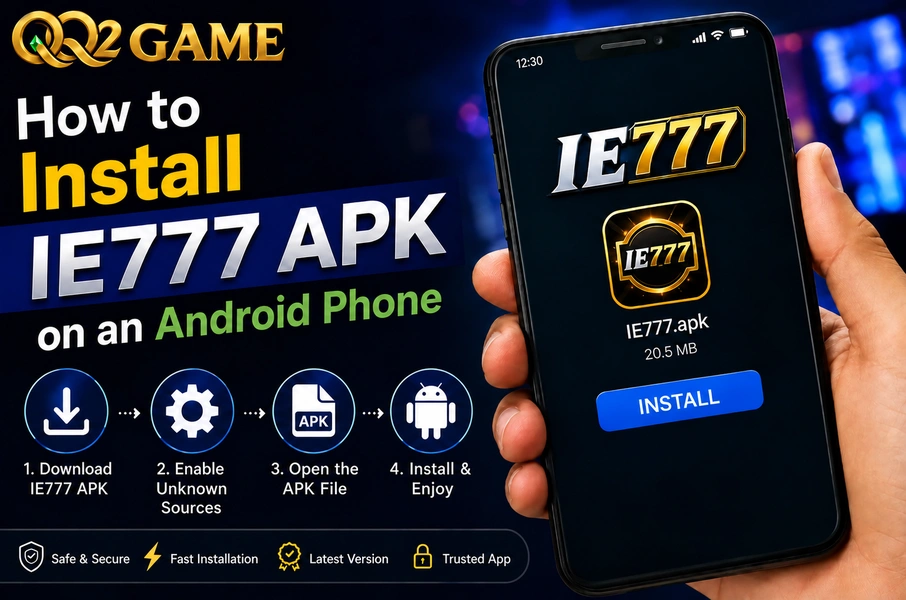
When you install IE777 APK manually, the browser first saves a file and Android then opens it through the package installer. That route differs from installing through a Play Store button. The important control is the installation access given to the browser or file manager, followed by the permissions granted to the installed app itself. Knowing which screen you are on makes the process easier to follow.
The walkthrough below starts with the package and phone requirements, follows Android’s installation screens and finishes with the checks available afterwards. Menu names can differ between manufacturers and Android releases, so use the setting’s purpose as well as its label.
What Android does with an APK
An APK is the package Android reads to install an application. A website may save it into Downloads in the same way it saves another file, but opening it starts installation rather than displaying an ordinary document. In outline, you obtain the package, review access for the app opening it and let Android’s installer carry out setup. The installed application is then launched through its own icon.
For IE777 APK, understanding this process helps explain an unknown-source prompt. Android is controlling which app may start an external installation. Before granting that access, identify the package source and read the information shown, rather than assuming the prompt means the phone is malfunctioning.
| Game Name | IE777 Apk |
| Apk Size | 8mb |
| Version | Android |
| Source | IE777 Android package information |
Prepare the phone and check the source
Begin with the file you intended to obtain. An unfamiliar page may distribute a modified or incomplete copy under the same application name. Keep the phone’s available security checks active while reviewing it. Those tools are useful, but they are one part of deciding whether the package and its source are the ones you expected.
Next compare the Android requirement and available storage with the phone. Review supported Android and Google Play system updates as well. If a warning appears during setup, read its actual wording before deciding what to do; an installation restriction, a compatibility error and a security warning are different messages.
Before opening the installer:
- Identify the intended publisher or package source.
- Compare the required Android release with the phone’s version.
- Leave room for the package and installed app.
- Use the device’s security tools to inspect the saved file.
- Read any access or permission request shown by Android.
- Avoid unexplained repackaged or modified copies.
Save the file you actually intended to obtain
Watch for pages with several unrelated download buttons or demands to install another unknown app first. The package should be identifiable by its file information. Before selecting a button, establish which file it will save. This is easier than sorting through several unexpected downloads after clicking everything on a crowded page.
Once the download is complete, find the package through the browser’s Downloads area or the file manager. If you receive a ZIP, an executable or another unexpected extension, check what was saved before opening it. A file appearing beside the intended APK does not make it part of the required installation.
Give installation access to the relevant app
Newer Android releases generally control external installation per app. Chrome and a file manager can therefore have different access settings. You are usually authorising the application opening the package, rather than turning on a single permission for every unknown file on the phone.
Open Settings and search for Install unknown apps if the option is hard to find. Depending on the phone, it may sit under Apps, Special app access, Security or a similarly named area. Search is useful when the menu path differs from a tutorial.
Select the browser or file manager you are actually using and review its installation switch. Grant access only for the setup you intend to complete. Once finished, return that control to its previous state if you do not need the app to open external installers regularly.
Follow the saved package through setup
Open Downloads and select the completed IE777 APK. Android’s package installer should display the application information and ask for confirmation before proceeding. Read the name and the details shown so that you can compare the installation request with the package you meant to open.
If a request appears unrelated to the app’s purpose, stop and check it before approving. When the information and source are satisfactory, use the installation option and let Android finish. There is no need to keep tapping the package while the same installer is already working.
The installation sequence
- Find the Downloads area on the Android device.
- Select the saved IE777 Game APK package.
- Open that file to start Android’s installer.
- If access is requested, follow the route to the relevant setting.
- Review installation access for the selected browser or file manager.
- Go back to the package installer afterwards.
- Check the application details on its confirmation screen.
- Choose Install when you are ready to proceed.
- Wait for Android’s completion message.
- Launch the installed app and look through its settings.
Understand a blocked installation before retrying
A refusal to install is not, by itself, a fault with the phone. Android may lack authorisation for that source, the release may not support the device, or the package may be incomplete. A security tool may also have flagged the file. Read the message to distinguish these possibilities before deciding whether to adjust a setting, obtain a complete copy or stop.
Avoid collecting random versions while trying to solve the error. Check that the intended transfer finished, review storage and compare the supported Android release. Keep the failed package’s version in mind so that you know whether a replacement file is actually different.
Common points to investigate:
- The opening app lacks installation access.
- Only part of the package was saved.
- The phone’s Android release is unsupported.
- Available internal storage is too limited.
- An existing copy conflicts with the new package.
- A device security check has raised a warning.
- The file has been altered or damaged.
Review the installed app’s own permissions
After setup, there is another set of controls to review. Installation access belongs to the browser or file manager; the newly installed app’s permissions determine which phone functions and information it can use. Look at those permissions directly rather than assuming that approving setup settled every later access request.
Go to Settings > Apps, select the installed application and open its permission area. Check the categories shown, such as notifications, storage, camera, microphone, contacts and location. Compare each request with the app’s purpose. Where Android permits it, deny access you do not consider necessary instead of leaving an accidental approval in place.
Return to this area when an update or a new function changes the access requested. A previous approval need not remain unquestioned indefinitely.
Distinguish setup errors from launch faults
If installation completes but the application will not open, restart the phone and try a fresh launch. Then review free storage and device compatibility. The app’s temporary cache may also be relevant to a startup problem. Observe whether the same action still fails after each change.
An existing installation can cause a different problem. Android may reject a replacement whose signing information does not match that copy. Before removing the older app, consider its stored information and what would be lost. Deleting data without understanding it can create another problem while you are trying to resolve the first.
When the same package repeatedly fails or a serious security warning appears, verify the file and source instead of trying to work around the warning.
What manual installation does and does not establish
Android supports manually opening an APK, but the route places responsibility on the person choosing the file. A package from an independent page needs its source and requests checked. Successful setup only tells you that Android was able to install that copy; it is not an assessment of everything the software may do.
An unwanted or modified application can sometimes install without an obvious error. Keep the device’s security features active, take warnings seriously and avoid unexplained modified packages. These checks apply to the actual file, even when a page uses a familiar IE777 name or a reassuring design.
When researching IE777 APK, use the package and source information to make the decision. A short transfer time is convenient, but it cannot answer questions about the file’s authenticity or requested access.
Tidy up after the one installation you intended
Keep Android updated, leave working storage available and use the security tools already on the phone. On a download page, stay with the file you meant to obtain instead of opening extra buttons or unrelated applications. That leaves fewer unexpected items to investigate once setup has finished.
After reviewing the installed app, remove external-installation access from the browser or file manager if it is no longer needed. Keep a backup of important personal information as well. That way, an unexpected application problem does not also leave you without another copy of files that matter.
Habits worth retaining afterwards:
- Review supported Android updates.
- Keep the intended package source identifiable.
- Inspect the saved file before starting setup.
- Revisit permissions when access requests change.
- Leave Play Protect or the equivalent device protection enabled.
- Restore installation-access settings you no longer need.
- Remove apps you no longer use or trust.
Finish with the installed app, not another download
Once Android confirms setup, open the app through its icon and review the account or initial settings. Keep the package version and any error details available if a problem remains. You can then return to the relevant step rather than collecting more copies without knowing what changed.
For an IE777 APK installation, the useful sequence is source, compatibility, installation access, setup and app-permission review. Work through it in that order. If a warning interrupts the sequence, deal with that message before moving on instead of treating completion as the only goal.
The Android and game information on QQ2 Game can be used as a reference when you need to revisit package terminology, setup methods or related app details.
Questions about manual Android setup
What does an APK do when I open it?
It gives Android the package used to install an application. Opening it starts the installer; the app is launched through its own icon after setup finishes.
Can this be done outside the Play Store?
Yes. Android supports that route, usually with installation access granted to the browser or file manager opening the package. Check the source before proceeding.
What might cause Android to refuse the package?
An access restriction, an incomplete file, incompatible software or a security warning may be involved. The exact message is the starting point for the next check.
Where is the external-installation switch?
On newer devices it usually belongs to a specific app. Search Settings for Install unknown apps if the path differs from the tutorial you are using.
Which checks belong before installation?
Review the package source, device requirements, available space and requested access, keeping Android’s security features active throughout setup.
Can the original downloaded APK be deleted afterwards?
Once the application is installed, the saved installer is generally not needed for ordinary use. You can delete that download if you do not need it for a future reinstall.
What should I do with a repeated installation failure?
Check the message, storage, compatibility and access setting. If the package is damaged or flagged, verify its source instead of repeatedly forcing the same attempt.
Does a completed manual install prove safety?
No. Source, file contents and requested access still matter. Keep the device’s protections enabled and avoid relying only on the fact that setup completed.